In the realm of artificial intelligence, the ability to process and understand information from multiple modalities, such as text, images, and audio, is a fundamental challenge. Multimodal models have emerged as a transformative solution by integrating these diverse data sources into a unified framework. This article explores the concept of multimodal models and their significant impact on various domains, from computer vision to natural language processing, opening new possibilities for AI applications.
Understanding Multimodal Models
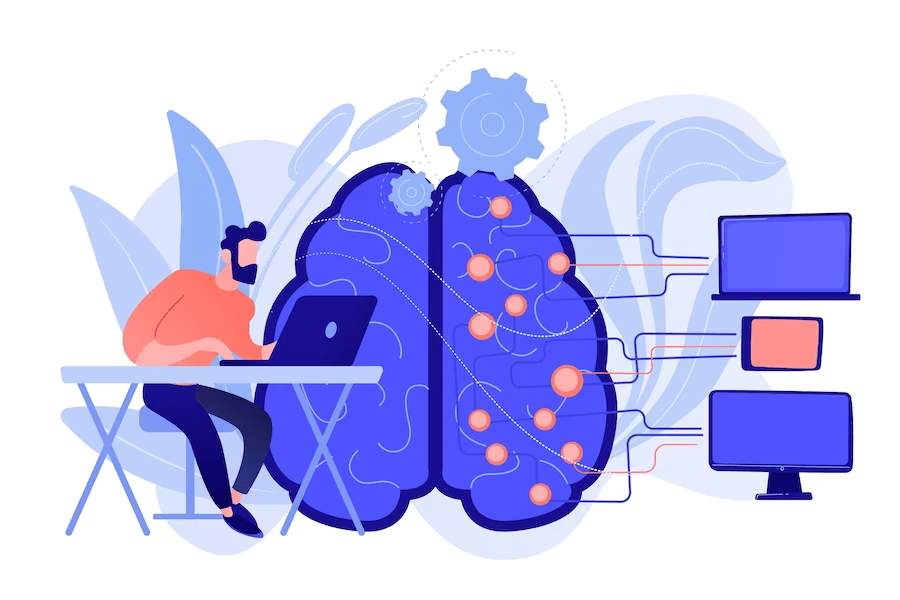
Multimodal models are machine learning architectures designed to handle and fuse information from different modalities, enabling a comprehensive understanding of complex data. These models combine the strengths of various sensory inputs, such as text, images, audio, and even sensor data, to capture richer contextual information and extract deeper insights.
Benefits of Multimodal Models
- Enhanced Contextual Understanding: By incorporating multiple modalities, multimodal models can capture and exploit the complementary information present in different data sources. For example, in image captioning, combining visual and textual inputs allows the model to generate captions that are more descriptive and contextually relevant.
- Improved Performance: Multimodal models often outperform their unimodal counterparts in tasks that require a holistic understanding of data. By leveraging multiple sources of information, these models can learn complex relationships and patterns that are not readily apparent when considering a single modality alone.
- Robustness and Adaptability: Multimodal models exhibit increased robustness and adaptability in real-world scenarios. They can handle situations where one modality might be noisy, incomplete, or unavailable. For example, in autonomous driving, combining visual input with sensor data enhances the model’s ability to make accurate predictions, even in challenging conditions.
Applications of Multimodal Models
- Computer Vision: Multimodal models have significantly advanced computer vision tasks, such as image classification, object detection, and image generation. By combining visual and textual information, these models can describe images in more detail, understand relationships between objects, and even generate novel visual content.
- Natural Language Processing (NLP): Multimodal models have revolutionized NLP tasks by incorporating visual information. For instance, in sentiment analysis, combining textual data with visual cues from images or videos improves the accuracy and context-awareness of sentiment prediction. Multimodal models also excel in tasks like visual question answering, where the model understands and answers questions based on both textual and visual input.
- Human-Computer Interaction: Multimodal models play a crucial role in advancing human-computer interaction. By considering multiple modalities such as speech, gestures, and facial expressions, these models can understand user intentions, emotions, and respond accordingly. This leads to more natural and intuitive human-computer interactions, benefiting applications like virtual assistants, augmented reality, and healthcare systems.
- Autonomous Systems: Multimodal models are instrumental in developing autonomous systems that can perceive and interact with the environment. For example, in self-driving cars, multimodal models fuse data from cameras, LiDAR sensors, and GPS to make informed decisions, ensuring safety and reliability.
Challenges and Future Directions
Building multimodal models comes with unique challenges, including data fusion, feature alignment, and modeling complex interactions between modalities. Research efforts are focused on developing innovative architectures, training methodologies, and large-scale multimodal datasets to address these challenges effectively.
Furthermore, the future of multimodal models lies in their ability to seamlessly integrate with real-world applications. From healthcare diagnostics to smart cities and virtual reality, multimodal models are poised to revolutionize how we interact with technology and leverage the power of combined sensory inputs.
Conclusion
Multimodal models are transforming the landscape of artificial intelligence by enabling the integration of multiple sensory inputs. By combining information from diverse modalities, these models achieve enhanced contextual understanding, improved performance, and robustness in various domains. From computer vision to NLP and human-computer interaction, multimodal models are at the forefront of AI innovation, paving the way for advanced applications and a more comprehensive understanding of our multimodal world.
 Finance Zoe